Can you do a Maasai Mara Safari without spending $1,000 a night? A guide to mid-range safaris
Spend five minutes looking at Maasai Mara camps online and you could easily come away thinking that you need to spend $1,000 or more per person, per night to have a really good safari.
You don't.
Having worked in the Maasai Mara and helped run safaris here for years, I would argue that once you have paid for the things that genuinely improve a safari — a great wildlife location, an excellent guide, a good vehicle, comfortable accommodation and good food — spending significantly more does not necessarily mean you will see more wildlife or have a better safari.
There are some extraordinary luxury camps in the Maasai Mara, and if you want private plunge pools, enormous suites, wine cellars, spas and highly personalised service, the higher price can absolutely be worthwhile.
But those aren't prerequisites for an exceptional safari.
For travellers whose priorities are wildlife, guiding, time in the bush and a comfortable place to stay, a good mid-range Maasai Mara safari can cost considerably less than $1,000 per person per night.
The trick isn't simply finding the cheapest camp.
It is knowing what is actually worth paying for.
What Actually Makes a Great Maasai Mara Safari?
When comparing safari prices, it is easy to focus on the accommodation. But your tent or room is only one part of the experience. If we were deciding where to spend our safari budget, these are the things we would prioritise.
1. Location
Staying inside the Maasai Mara National Reserve means you wake up already surrounded by wildlife, with less time spent driving in and out of the Reserve each day. A cheaper room is not always better value if it costs you valuable safari time.
2. A Good Guide
A good guide can make or break a safari. The best guides understand animal behaviour, tracks, habitats and seasonal movements, and know when to wait rather than simply rushing from one sighting to another.
If you are trying to save money, guiding is one of the last areas we would compromise on.
3. A Private Safari Vehicle
A private vehicle gives you far more freedom. You decide when to leave, what you want to look for, how long to stay at a sighting and whether to avoid crowded areas.
For photographers, families and keen wildlife enthusiasts, this can be far more valuable than a more luxurious room.
4. Comfortable Accommodation and Good Food
Mid-range should still mean comfortable: a proper bed, hot shower, good meals and somewhere pleasant to relax between drives.
Beyond that, however, much of the price difference between a $500 safari and a $1,500 safari is often about luxury rather than safari. Pools, spas, huge suites and private butlers can be fantastic, but they are not necessary for an exceptional wildlife experience.
Where Can You Save Money Without Ruining Your Safari?
An affordable Maasai Mara safari should be about cutting unnecessary costs, not compromising the experience itself.
Choose a Good Tented Camp
A well-run tented camp can still offer comfortable beds, hot showers, good food and somewhere pleasant to relax. You do not need an ultra-luxury lodge to be comfortable.
Travel Outside Peak Migration Season
July to September is the busiest and most expensive period because of the Great Migration. The Mara still has excellent resident wildlife throughout the rest of the year, so travelling outside peak season can offer much better value.
Stay Longer in One Good Wildlife Area
Moving camps every couple of nights can add transport costs and take time away from game drives. Three or four nights in one strong wildlife area can often make for a better and more relaxed safari.
Be Selective With Extras
Balloon safaris and other activities can be fantastic, but they are not essential. If you are watching your budget, an extra morning on a game drive may be just as rewarding.
Share the Cost of a Private Vehicle
Vehicle and guide costs are largely fixed. At Tor's Camp, a private vehicle and guide costs $250 per day and can take up to seven guests, so travelling with friends or family can reduce the per-person cost significantly.
Consider a Shorter Safari
You do not necessarily need a week in the Mara. A well-planned three-night safari can still give you several excellent game drives and may be better value than stretching your budget over a longer trip with more compromises.
When Is the Cheapest Time to Visit the Maasai Mara?
The time of year can make a big difference to the cost of a Maasai Mara safari, mainly because both accommodation rates and park fees change seasonally.
For non-resident adults, Maasai Mara National Reserve entrance fees are $100 per person per day from January to June and $200 per person per day from July to December. For a couple spending three days in the Reserve, that alone can mean a $600 difference.
January to June: Best Value
If your priority is excellent wildlife rather than specifically seeing the Great Migration, January to June can offer some of the best value in the Mara.
Resident wildlife remains year-round, including lions, leopards, cheetahs, elephants, giraffes, hyenas and large numbers of plains game. March to May can be particularly affordable, with lower camp rates, greener landscapes and fewer visitors.
July to September: Peak Season
July, August and September are the most famous months because of the Great Migration and the possibility of seeing huge wildebeest herds and river crossings.
It can be spectacular, but it is also the busiest and most expensive period.
October to December: Quieter Alternatives
October and November can be excellent for travellers who are less concerned about the Migration. November in particular can offer lower accommodation rates, greener scenery and much quieter sightings, while the Mara’s resident wildlife remains.
If your main goal is seeing great African wildlife rather than specifically witnessing the Great Migration, travelling outside July–September can save a substantial amount without sacrificing the core safari experience.
How Much Does a Mid-Range Maasai Mara Safari Actually Cost?
This is where safari pricing can become confusing.
Some camps advertise accommodation only.
Others include meals.
Others include game drives but exclude Reserve entrance fees.
A rate that initially looks considerably cheaper can therefore become much more expensive once all the extras have been added.
To make the comparison more useful, here are some real examples using Tor's Camp's 2027 rack rates.
These examples include:
accommodation in our Mtoni tents;
tea, coffee and drinking water;
morning wake-up tea or coffee;
packed breakfasts for early starts;
picnic lunches for full-day game drives;
bush dinners and private dining experiences beneath the stars;
sundowners in scenic locations;
campfire evenings;
daily housekeeping and camp service;
VAT;
community bed-night fees;
Maasai Mara National Reserve entrance fees;
a private 4x4 safari vehicle;
and a private guide.
Transfers to and from the Maasai Mara, alcoholic and soft drinks, balloon safaris and other optional extras are not included in the examples below.
| Example Safari | 2 Nights | 3 Nights | 4 Nights |
|---|---|---|---|
| Couple – March to May | $2,020 | $3,030 | $4,040 |
| Couple – July to September | $2,600 | $3,900 | $5,200 |
| 4 Adults – July to September | $4,700 | $7,050 | $9,400 |
| Family of 4 – July to September* | $3,620 | $5,430 | $7,240 |
*Family example assumes two adults and two children aged 9–17. Prices are based on Tor's Camp 2027 rack rates and include accommodation, meals, private vehicle and guide, community bed-night fees and Maasai Mara National Reserve entrance fees.
These figures are useful because they represent considerably more than simply a bed for the night.
They include the major costs that actually make up the safari.
Can a Couple Safari in the Mara for Under $1,000 Per Person Per Night?
Yes — even in peak season.
At Tor's Camp in July, August or September, two non-resident adults pay about $1,300 per night in total, including:
full-board accommodation;
community bed-night fees;
a private vehicle and guide;
Maasai Mara Reserve fees.
That works out at around $650 per person per night.
In March, April and May, the same style of safari falls to about $505 per person per night.
So you can stay inside the Maasai Mara National Reserve, have your own private vehicle and guide, and still spend far less than $1,000 per person per night.
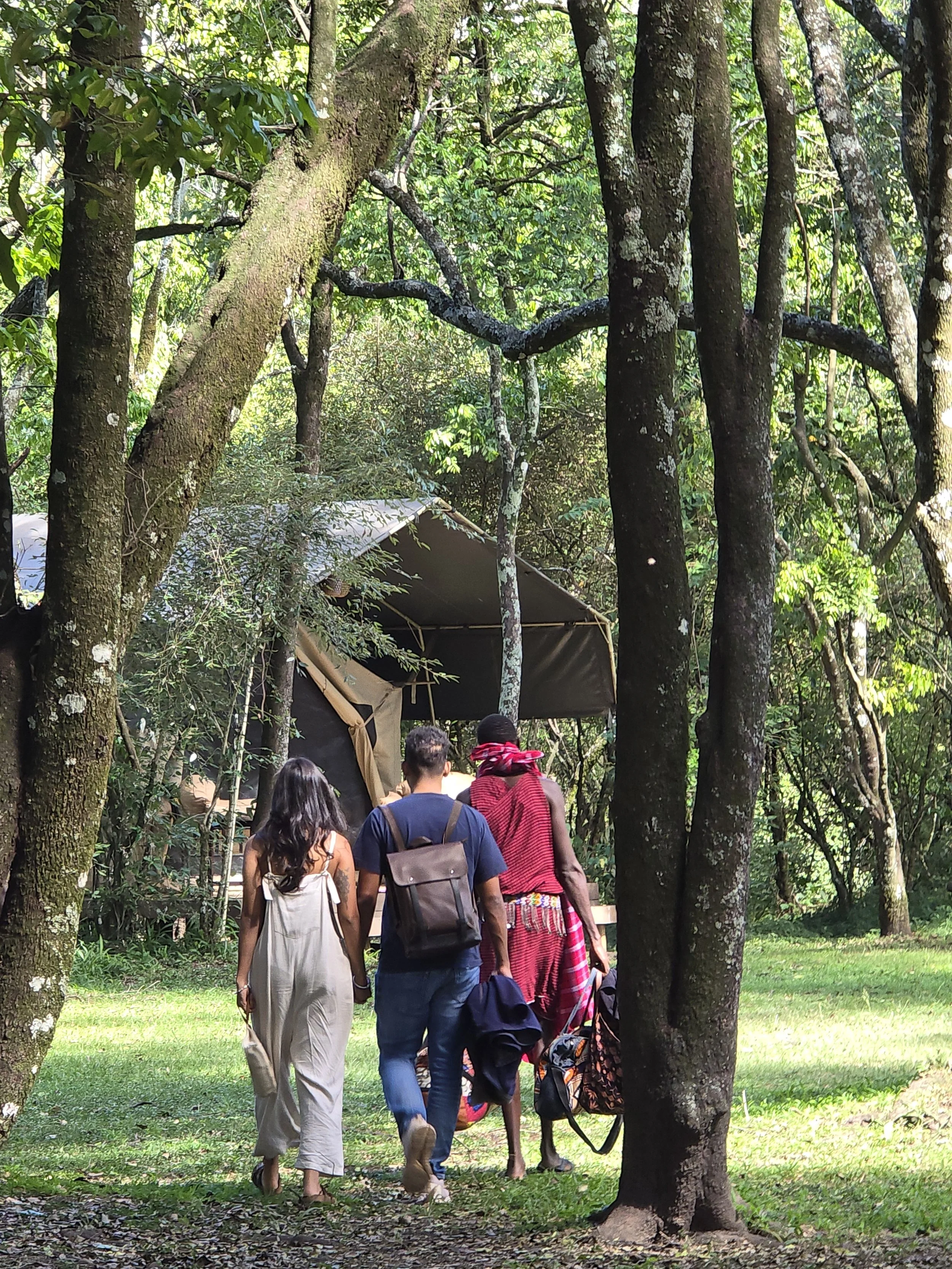
Our tents are wild and secluded
A couple walking to their tent at Tor’s Camp, where the focus is on comfort, privacy and being immersed in the Maasai Mara.
Why Groups Can Get Surprisingly Good Value
Safari economics become particularly interesting once more people travel together.
The accommodation and park fees increase with each additional guest, but the vehicle doesn't.
At our high-season rates, for example:
A couple pays approximately $650 per person per night.
Four adults travelling together pay approximately $588 per person per night.
Larger groups can reduce the private vehicle cost per person even further.
This is one reason why travelling to the Maasai Mara with friends or extended family can represent surprisingly good value.
It also opens up another possibility: exclusive use of a small safari camp.
Rather than joining a large lodge with dozens of unrelated guests, a group can sometimes take over an intimate camp and essentially have the entire safari operation to themselves.
For families, groups of friends, photography groups and multigenerational trips, this can provide both better value and a much more personal experience.
Don't Save Money in the Wrong Places
There is, of course, a cheaper way to do almost everything.
You can stay farther away.
You can share vehicles with more people.
You can reduce the quality of the food, accommodation or guiding.
But the cheapest possible Maasai Mara safari isn't necessarily the best-value safari.
We would be particularly cautious about saving money by compromising on three things:
Your guide. A knowledgeable guide can completely change what you see and understand.
Your wildlife location. Saving on accommodation loses some of its appeal if you then spend hours every day reaching the areas you actually came to explore.
Your time. Safari days are expensive. Spending a large part of them on unnecessary transfers can be a false economy.
A better approach is to remove luxury extras that don't particularly matter to you while protecting the parts of the trip that actually affect your safari.
Where Tor's Camp Fits In
Now comes the shameless promotion of our own camp.
Before building Tor's Camp, we had worked at and experienced different safari camps in the Maasai Mara. When Tor's developed from a collection of simple campsites into the camp it is today, the basic idea was to concentrate on the things that we think actually make a safari special.
We don't try to compete with the Mara's ultra-luxury lodges.
Instead, Tor's is designed to be mid-range in price, but not mid-range in safari experience.
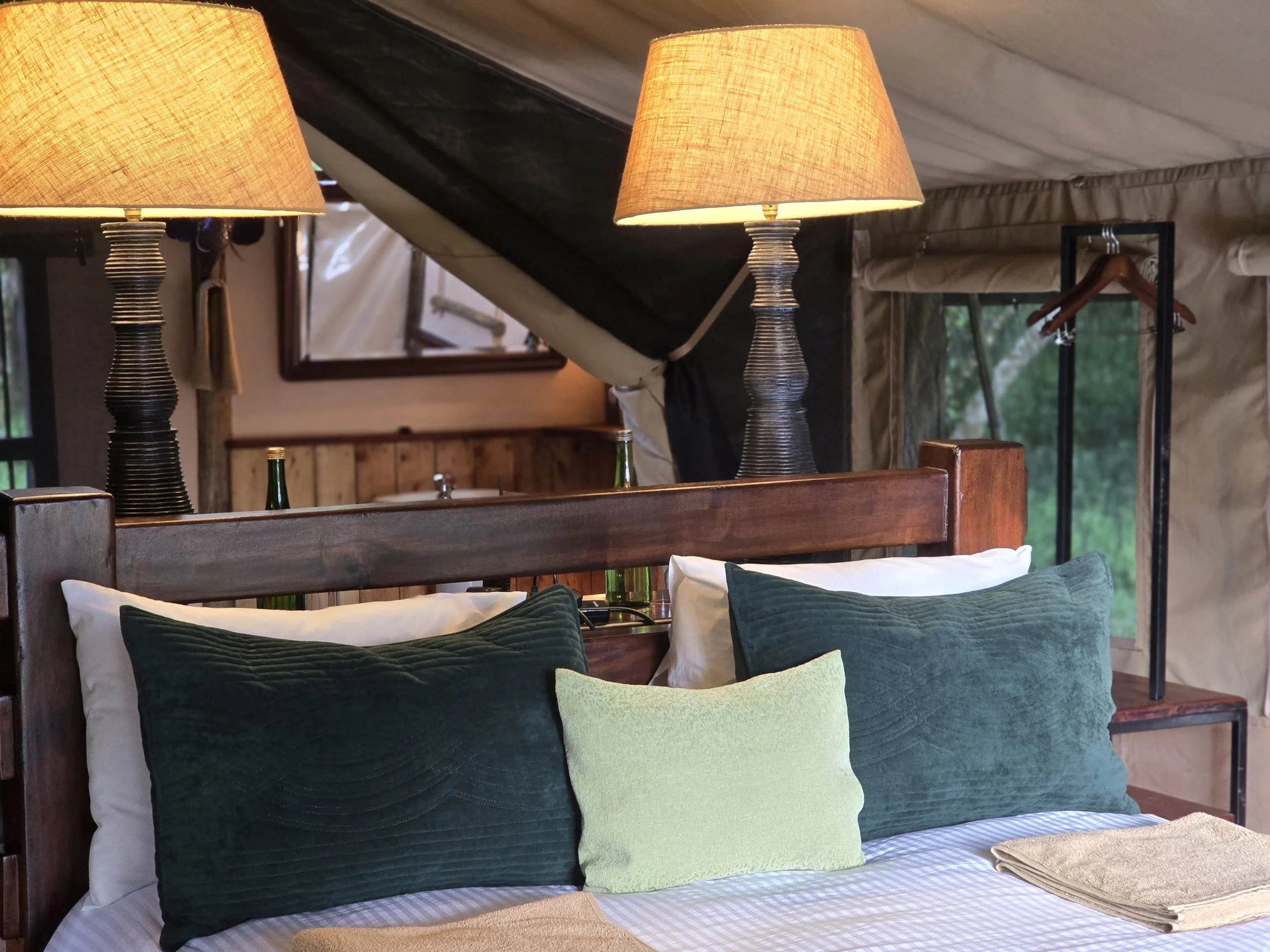
Tor’s camp gives you everything you need, and nothing you don’t.
Inside the Maasai Mara National Reserve
Tor's Camp is located inside the Reserve, on the Olare Orok River.
There is no morning commute into the Mara.
You leave camp and you are already on safari.
Private Vehicle and Guide
Our safari packages can include your own 4x4 Land Cruiser and guide.
That gives guests the freedom to build the day around their interests rather than somebody else's schedule.
If you want to leave at first light, you can.
If you want a packed breakfast and a long morning looking for big cats, you can.
If you want to spend an hour watching elephants rather than racing to the next radio call, you can do that too.
Small and Personal
Tor's has eight fixed tents rather than being a large lodge.
That helps us keep the experience personal and informal.
Wild, But Comfortable
Our Mtoni tents provide proper beds and en-suite facilities, while the camp retains the feeling of actually being in the bush.
Meals can include packed breakfasts for game drives, picnic lunches, dinners in camp and private dining beneath the stars.
Guests can return from an evening drive for a drink around the campfire rather than feeling as though they have returned to a conventional hotel.
And because the camp is unfenced, wildlife remains very much part of the experience.
A Genuine Wildlife Location
The Olare Orok River and surrounding riverine habitat support an extraordinary variety of wildlife.
Hippos live close to camp, elephants move through the area, and lions and hyenas are regularly heard at night.
More importantly, we have direct access to the broader Maasai Mara ecosystem from the moment we leave camp.
That is ultimately what we believe guests should be paying for.
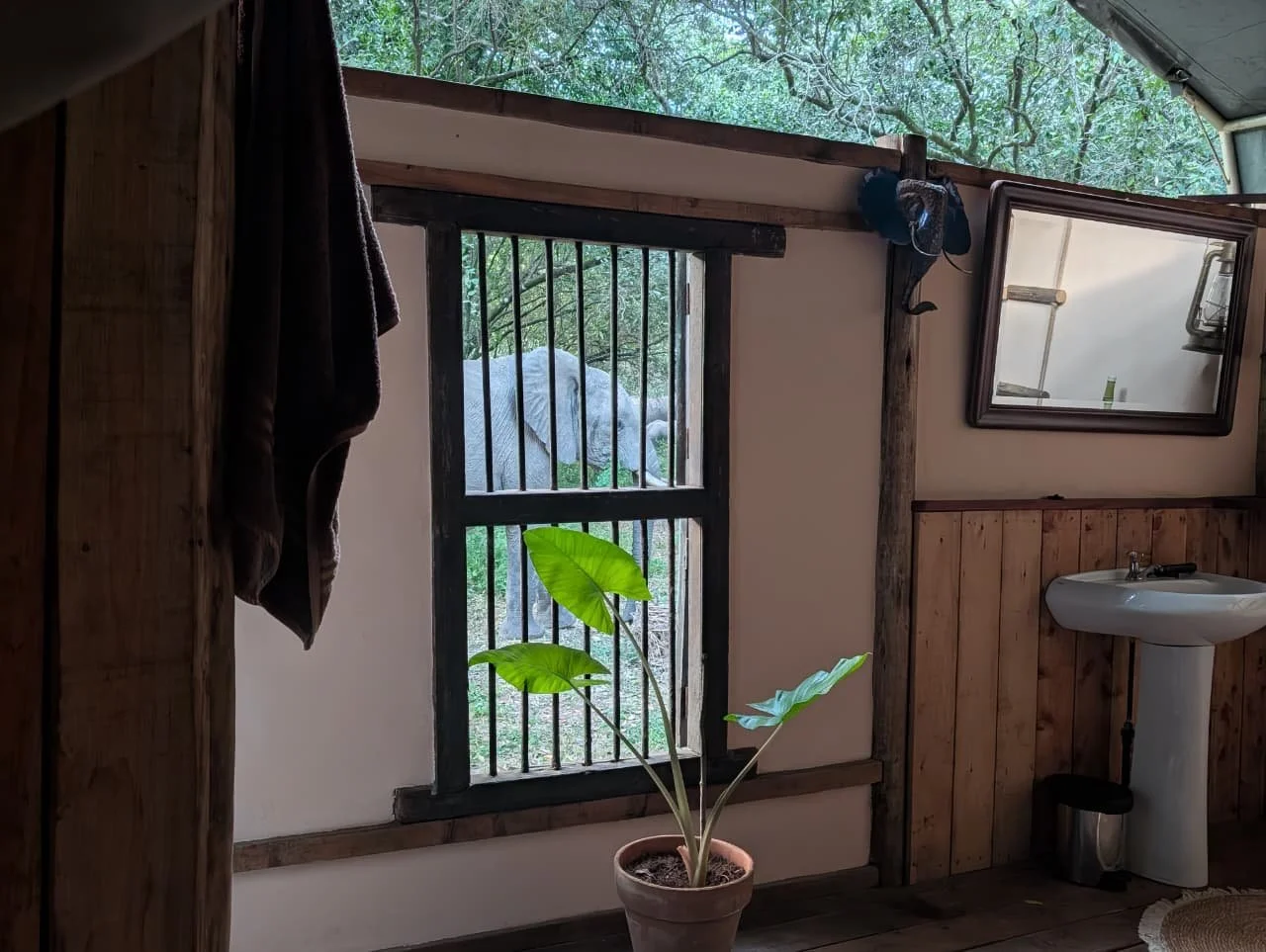
An elephant passes behind one of our tent’s bathrooms.
So, Do You Need to Spend $1,000 a Night on a Maasai Mara Safari?
No.
The Maasai Mara has exceptional luxury camps charging $1,000–$1,500+ per person per night, but that is not what you need to spend for a great safari.
If your priorities are excellent wildlife, a good guide, a private vehicle, great food and comfortable accommodation, you can spend considerably less.
At Tor's Camp, even in July, August and September, a complete safari for two adults works out at around $650 per person per night, including full board, Reserve fees, and a private vehicle and guide.
Travel outside peak season or with a small group, and the cost can fall further.
The better question is not “What is the cheapest safari?” but “What is actually worth paying for?”