13 Mistakes first-time safari goers make—and how to avoid them
An African safari is often a once-in-a-lifetime trip. Understandably, most first-time visitors spend months comparing destinations, camps, prices and itineraries before making a decision.
The difficulty is that safari travel can be surprisingly complicated. Two holidays that look almost identical on paper can provide completely different experiences once you arrive.
Having grown up in Kenya, worked as a safari guide and now helping to run Tor’s Camp inside the Maasai Mara National Reserve, I regularly meet guests who arrive with questions about what they should have booked, packed or planned differently.
Most safari mistakes are not disastrous. However, they can mean spending less time with wildlife, paying unexpected costs or feeling rushed during what should be an extraordinary experience.
Here are 15 of the most common mistakes first-time safari goers make—and how to avoid them.
1. Staying Outside the Reserve Simply Because It Looks Cheaper
Accommodation outside the Maasai Mara National Reserve is often cheaper than staying inside it. However, the nightly rate does not always tell the whole story.
When you stay outside the reserve, you may need to drive to an entrance gate every morning. During busy periods, this can involve queues, paperwork and additional travel before the game drive has properly begun.
You must also leave the reserve before the gates close, which can mean cutting short an excellent sighting late in the afternoon.
Staying inside the reserve allows you to begin your safari from camp. At Tor’s Camp, we are already surrounded by wildlife on the banks of the Olare Orok River. Guests can leave early in the morning without first travelling through a town or waiting at the main gate.
This is particularly valuable around sunrise and sunset, when the light is beautiful and many predators are at their most active.
Before choosing a cheaper camp outside the reserve, compare the entire experience rather than only the room price. Ask how long it takes to reach the gate, whether queues are common and how much usable safari time you will actually have.
2. Booking Too Few Nights
One of the most common mistakes is trying to fit the Maasai Mara into one or two nights.
A two-night stay usually provides only one full day in the reserve. Arrival and departure days are often partly taken up by transfers, flights, meals and checking in.
Wildlife does not follow an itinerary. Lions may spend much of the day sleeping. A leopard might remain hidden in thick vegetation. A cheetah could begin hunting just as you need to return to camp.
The longer you stay, the more opportunities you have to experience different areas, weather conditions and animal behaviour.
For most first-time visitors, I recommend at least three nights. Four nights is even better if the Mara is the main focus of the holiday.
This gives you time for early-morning drives, evening drives, a full day exploring farther areas and the option of including an activity such as a balloon safari without sacrificing most of your normal game-viewing time.
3. Assuming Every Game Drive Is Private
Many safari packages include game drives, but that does not necessarily mean you will have your own vehicle.
At larger lodges, guests are often placed in shared vehicles. This can work perfectly well, particularly for solo travellers, but it also means compromising.
One person may want to photograph birds, while another only wants to see lions. Some guests prefer long drives, while others want to return to the lodge early. Even deciding where to sit can become important when several people are carrying cameras.
A private vehicle gives you far more freedom. You can leave earlier, stay longer at sightings and focus on the wildlife that interests you most.
At Tor’s Camp, we specialise in private safari experiences. This is especially useful for families, photographers and groups travelling together.
When comparing safari prices, always ask whether the vehicle is private or shared. A package that initially appears more expensive may offer much greater value if it includes a dedicated vehicle and guide.
4. Choosing a Camp Based Only on Luxury
There is nothing wrong with enjoying a beautiful room, swimming pool or spa. However, more facilities do not automatically create a better safari.
The most important parts of a safari are usually the camp’s location, guiding, vehicles and the amount of time you spend in the wilderness.
A large luxury lodge may have impressive facilities but accommodate dozens—or even hundreds—of guests. It can feel more like a resort than a bush camp.
Smaller tented camps tend to provide a more personal and immersive experience. You learn the sounds of the surrounding wildlife, eat meals around the fire and get to know the guides and camp team.
Tor’s Camp is deliberately comfortable but authentic. Our tents have proper beds and private bathrooms, but the experience remains connected to the environment around us. The camp is unfenced, elephants sometimes pass through and guests regularly hear lions and hippos at night.
Choose the level of comfort that suits you, but do not assume the most expensive property will automatically provide the most memorable wildlife experience.
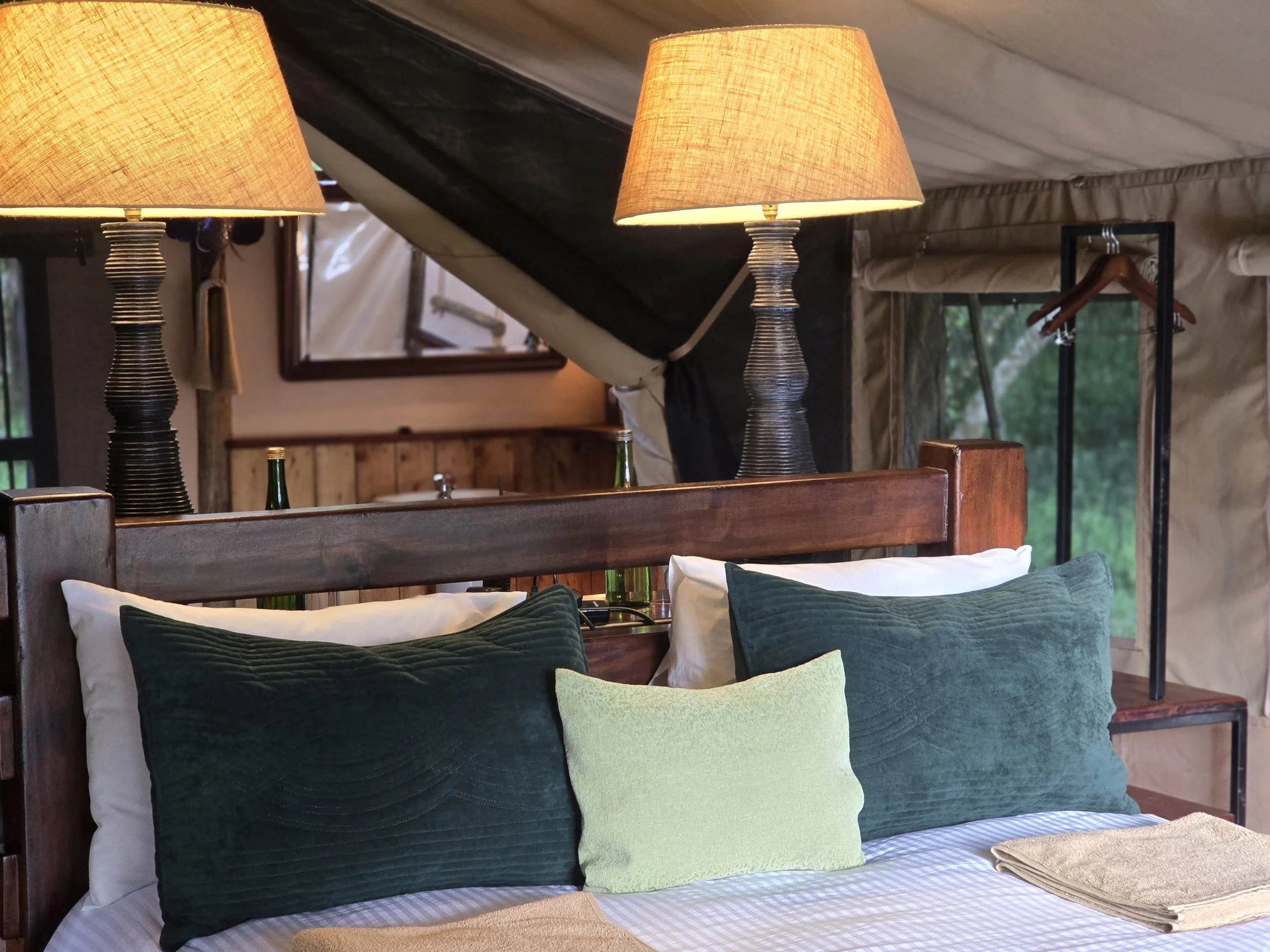
Tor’s Camp aims to blend that wild camping feeling with all the creature comforts.
5. Expecting Constant Action
Wildlife documentaries condense weeks or months of filming into an hour. This can create the impression that predators are constantly hunting and dramatic encounters happen every few minutes.
A real safari is slower and less predictable.
You might spend an hour watching a lion pride sleeping, only for the entire atmosphere to change when they begin moving. A leopard sighting may require patience as the animal disappears into a bush and reappears later. Sometimes you will wait quietly beside a cheetah without knowing whether it will hunt or simply rest.
This uncertainty is part of what makes safari exciting.
The best sightings often come from slowing down rather than racing between radio calls. Watching an animal for longer also reveals behaviour that is easily missed: cubs playing, elephants communicating, birds mobbing a predator or lions positioning themselves before a hunt.
Arrive with an open mind and allow the experience to unfold naturally.
6. Treating the Safari Like a Checklist
Most first-time visitors arrive hoping to see the Big Five: lion, leopard, elephant, buffalo and rhino.
There is nothing wrong with having a wish list, but a safari becomes less enjoyable when it turns into a race to tick off species.
The Maasai Mara is especially famous for lions, leopards and cheetahs, but some of the most memorable moments may involve animals you knew very little about before arriving.
You might see hyenas interacting at a den, a martial eagle hunting, giraffes fighting, jackals playing or a herd of elephants helping a calf cross a river.
Tell your guide what you hope to see, but remain open to everything else. A good guide will help you understand the wider ecosystem rather than simply driving from one famous animal to another.
7. Visiting Only for the Great Migration
The Great Migration is extraordinary, but it is not the only reason to visit the Maasai Mara.
River crossings are unpredictable. Herd movements depend on rainfall and grazing conditions, so nobody can guarantee that a crossing will happen during a particular game drive—or even during a particular stay.
The migration season can also attract large numbers of visitors and vehicles to well-known crossing points.
Outside the peak migration months, the Mara remains one of Africa’s finest wildlife destinations. Resident lions, leopards, cheetahs, elephants, giraffes, buffalo and plains game remain in the ecosystem throughout the year.
Quieter periods can offer excellent sightings with fewer vehicles, greener landscapes and a more relaxed atmosphere.
Choose your travel dates according to the overall experience you want, rather than treating a river crossing as the only measure of a successful safari.
8. Not Understanding Park Fees and Other Additional Costs
Safari pricing can be confusing. A quotation may include accommodation and meals but exclude park fees, transfers, drinks, flights or certain activities.
Park fees are normally charged separately and can form a significant part of the overall cost of a Maasai Mara safari.
Before paying a deposit, ask for a clear breakdown showing:
Accommodation and meals
Park or conservation fees
Game-drive vehicles
Guide services
Transfers or internal flights
Drinks
Optional activities
Taxes
Gratuities
It is also worth confirming how park fees are calculated on arrival and departure days. Depending on the itinerary, it may be possible to transfer directly to camp on the first day and begin game drives the following morning, reducing unnecessary costs while still enjoying a longer stay.
A good camp or safari operator should explain the structure clearly rather than presenting unexpected charges later.
9. Packing Too Much
Safari vehicles and small aircraft have limited luggage space. Large hard-shell suitcases can be especially difficult to store.
In reality, most people need far less than they expect.
Lightweight, comfortable clothing is best. Neutral colours such as khaki, brown, grey and green are practical because they do not show dust easily and blend into the environment.
You do not need a completely new safari wardrobe. A few shirts, comfortable trousers or shorts, a warm layer, a waterproof jacket and practical shoes will cover most situations.
Many camps can arrange laundry, although underwear may need to be washed personally.
Use a soft-sided bag where possible, especially when travelling on a small internal flight.
10. Forgetting How Cold Mornings Can Be
People often picture the African savannah as permanently hot. Midday temperatures can certainly be warm, but early mornings in an open vehicle may feel surprisingly cold.
Game drives often begin around sunrise. Before the sun rises fully, the wind created by the moving vehicle can make the temperature feel considerably lower.
Bring layers that are easy to remove as the day warms up. A fleece, jumper or lightweight down jacket is often more useful than people expect.
A hat can also help on cold mornings as well as protecting you from the sun later in the day.
11. Underestimating the Value of a Good Guide
A knowledgeable guide does much more than find animals.
Good guiding involves reading tracks, understanding animal behaviour, positioning the vehicle carefully and deciding when to wait rather than move on.
A guide should also interpret the entire landscape: why animals are using a particular area, how weather influences their behaviour and how different species interact.
The difference between an average sighting and an exceptional one is often the guide’s ability to anticipate what may happen next.
When choosing a safari, ask about the guiding setup. Will you have the same guide throughout your stay? Is the guide employed by the camp? Will the itinerary be adapted around your interests?
Private, consistent guiding allows the guide to learn what you enjoy and shape the safari accordingly.
12. Not Allowing Enough Time at Sightings
Some visitors become anxious that they might be missing something elsewhere. After five minutes with a leopard, they want to leave in search of lions. Once they find the lions, they immediately ask about cheetahs.
This approach can result in seeing many animals but experiencing very little behaviour.
Leopards are a good example. They may spend long periods resting or hidden in vegetation. With patience, the leopard might climb a tree, begin hunting or move into a much better photographic position.
The same applies to lions. A sleeping pride may appear inactive, but subtle changes in posture, attention or wind direction can indicate that they are preparing to move.
Trust your guide and give sightings time to develop. Safari rewards patience.
13. Trying to Control Every Minute of the Itinerary
Planning is important, but safari is influenced by wildlife, weather, road conditions and unexpected opportunities.
A rigid schedule can work against you.
You may plan to return for breakfast at 9:00 a.m., only to find a leopard with a cub shortly before leaving. An evening drive may become longer because lions begin hunting near sunset. Rain might make one area difficult to access but create beautiful conditions elsewhere.
At Tor’s Camp, we prefer to keep the safari flexible. Guests can take picnic breakfasts, return to camp for lunch, remain out for a full day or divide the day into morning and evening drives.
The best plan is often to explain your priorities to your guide and then allow them to respond to the conditions.
What Makes a Good First Safari?
A good first safari is not necessarily the most expensive or elaborate.
It is one that gives you enough time, puts you in the right location and allows you to experience wildlife without being rushed.
My main recommendations are simple:
Stay for at least three nights, choose a camp with good access to wildlife, understand exactly what your package includes and prioritise guiding and vehicle arrangements over unnecessary facilities.
Most importantly, arrive curious rather than carrying a strict checklist.
The Maasai Mara is not a zoo or a film set. Every drive is different, and nobody can predict exactly what you will see. That unpredictability is what makes it so compelling.
An Authentic Safari Inside the Maasai Mara
Tor’s Camp is a small, family-run tented camp located inside the Maasai Mara National Reserve on the banks of the Olare Orok River.
Our aim is to provide a comfortable but authentic safari: proper beds, good food, private guides and vehicles, and a peaceful camp surrounded by wildlife.
Because we are inside the reserve, guests can begin their game drives early, enjoy the best morning and evening light and avoid travelling through the main gates each day.
The camp is unfenced, and the experience remains closely connected to the natural environment. Hippos live in the river below camp, elephants regularly move through the surrounding area and lions are often heard after dark.
It is not a large hotel or a formal luxury resort. It is a personal, flexible and immersive way to experience one of Africa’s greatest wildlife areas.
For guests planning their first safari, this combination of location, private guiding and a small-camp atmosphere can make a much greater difference than another swimming pool or an unnecessarily elaborate room.